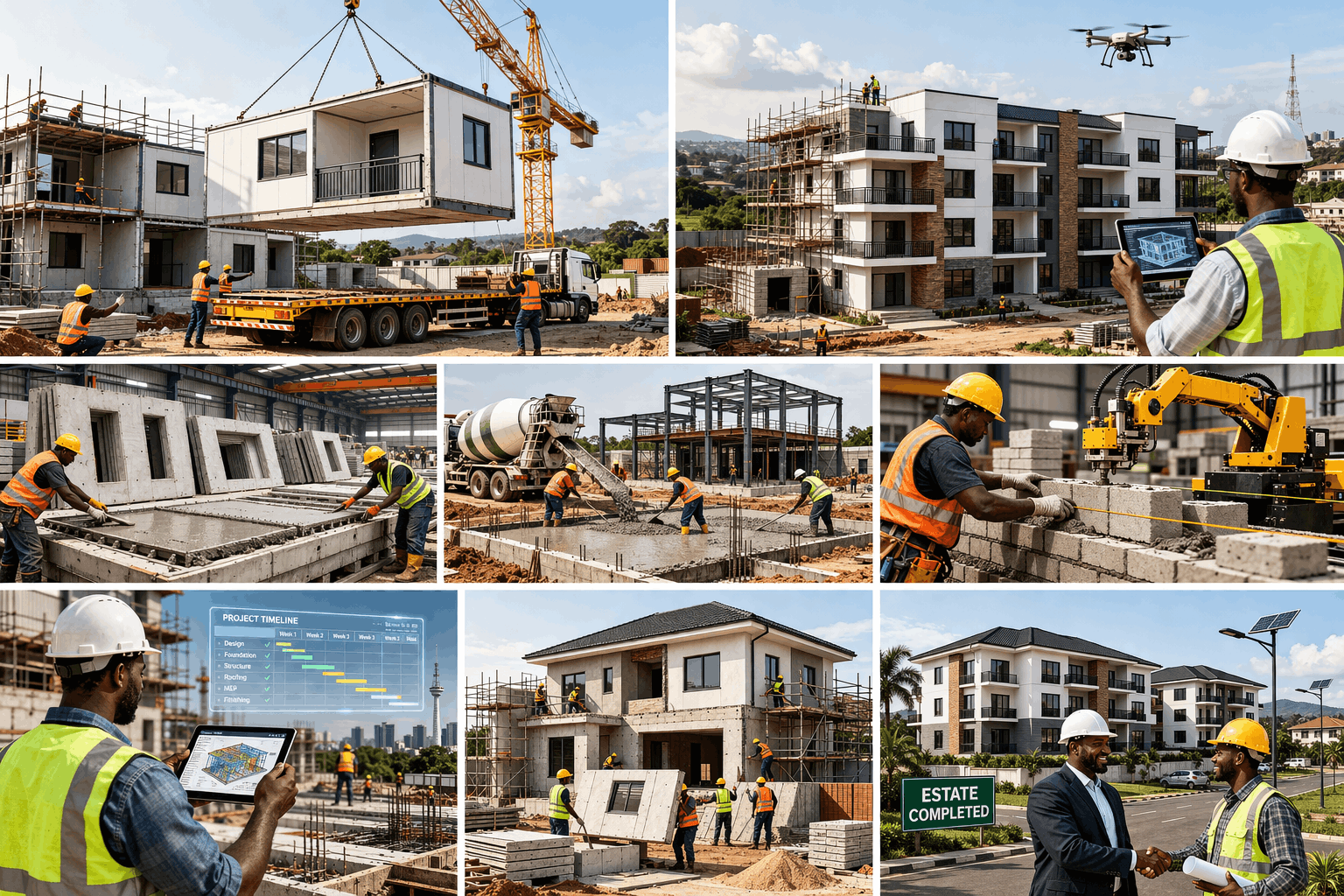
The construction industry in Nigeria is evolving rapidly, driven by the need to deliver projects faster, reduce costs, and meet the growing demand for housing and infrastructure. In 2026, modern construction techniques are redefining how buildings are designed and executed, shifting from traditional, time-intensive methods to smarter, more efficient processes. These innovations are not only shortening project timelines but also improving quality, sustainability, and scalability.
Prefabrication and Modular Construction
Prefabrication has become one of the most impactful techniques in reducing construction timelines. This method involves manufacturing building components—such as walls, slabs, and structural frames—off-site in controlled environments before transporting them to the construction site for assembly.
Modular construction takes this a step further by producing entire sections of buildings that can be quickly installed on-site. This significantly reduces delays caused by weather conditions, labor shortages, and material inconsistencies. It also ensures better quality control, as components are produced under standardized conditions.
Use of Advanced Construction Technologies
Technology is playing a central role in accelerating construction processes. Tools such as Building Information Modeling (BIM) allow architects, engineers, and contractors to collaborate in real time, identifying potential issues before construction begins.
Drones are now widely used for site surveys, inspections, and progress tracking, eliminating the need for time-consuming manual assessments. Additionally, 3D printing technology is gradually being introduced, enabling the rapid production of building elements with minimal material waste.
Fast-Track Construction Methods
Fast-track construction is gaining popularity in Nigeria, especially for large-scale developments. This approach allows multiple phases of a project—such as design, procurement, and construction—to run simultaneously rather than sequentially.
By overlapping these stages, developers can significantly reduce project delivery time. However, this method requires strong coordination and project management to avoid costly errors or rework.
Adoption of High-Performance Materials
Modern construction materials are also contributing to faster project completion. High-performance concrete, lightweight steel frames, and insulated panels are easier to install and require less curing or finishing time compared to traditional materials.
These materials not only speed up construction but also enhance durability and energy efficiency. Their use is becoming increasingly common in residential and commercial developments across Nigeria.
Mechanization and Automation on Site
The use of machinery and automated equipment is reducing reliance on manual labor and increasing productivity on construction sites. Equipment such as concrete pumps, automated bricklaying machines, and advanced lifting systems enable faster execution of tasks that would otherwise take significantly longer.
This shift toward mechanization is particularly important in urban areas where time constraints and labor costs are high.
Improved Project Planning and Management
Efficient project planning is a key factor in reducing construction timelines. Modern project management software allows stakeholders to monitor progress, allocate resources effectively, and respond quickly to challenges.
Digital scheduling tools help ensure that materials, labor, and equipment are available when needed, minimizing downtime and preventing costly delays.
Design Optimization and Standardization
Standardized building designs are becoming more common, especially in large housing developments. By using repeatable layouts and components, developers can streamline construction processes and reduce the time spent on custom design and adjustments.
Projects that adopt this approach—such as structured residential estates with multiple housing units—benefit from faster execution and consistent quality across all units .
Lean Construction Practices
Lean construction focuses on minimizing waste—whether in materials, time, or labor—while maximizing value. This approach emphasizes continuous improvement, efficient workflows, and collaboration among all stakeholders.
By identifying and eliminating inefficiencies, lean construction helps ensure that projects are completed faster without compromising on quality.
Skilled Workforce and Training
The adoption of modern construction techniques requires a skilled workforce capable of operating advanced tools and technologies. Training and capacity building are therefore essential components of this transformation.
As more professionals gain expertise in modern methods, the industry becomes better equipped to deliver projects efficiently and at scale.
The Future of Faster Construction in Nigeria
Modern construction techniques are reshaping the Nigerian construction landscape, making it possible to deliver projects in record time without sacrificing quality or sustainability. As demand for housing and infrastructure continues to grow, these methods will play a critical role in bridging the gap between supply and demand.
Forward-thinking developers who embrace these innovations are not only reducing project timelines but also positioning themselves as leaders in a competitive and rapidly evolving industry.